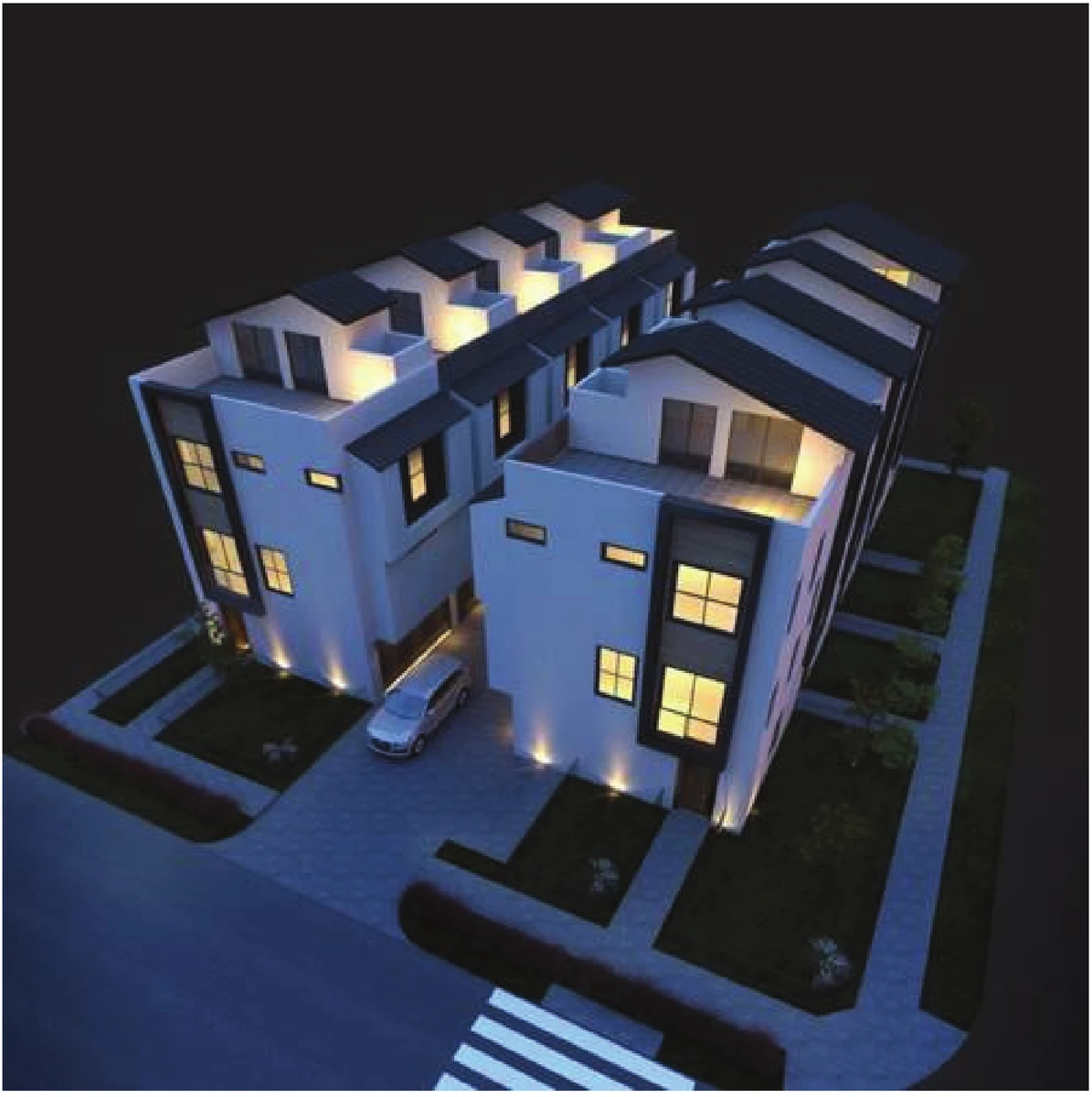
Original brochure illustration. RV-park illustration — historical proposal illustration; Pahrump site identity not established. Project-site identity and current completion status are unverified.
A historical $20 million residential, staffing-project and retail financing proposal.

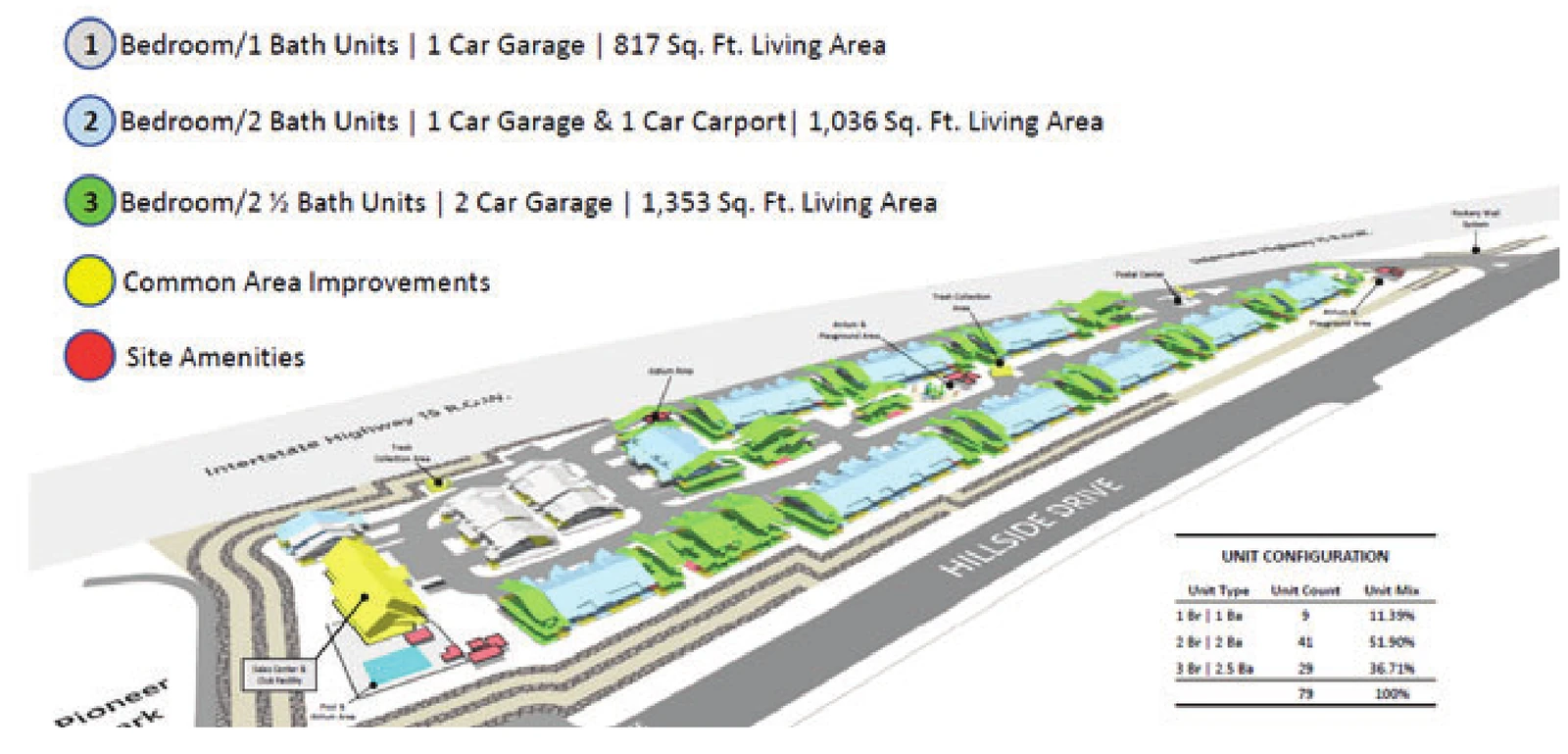
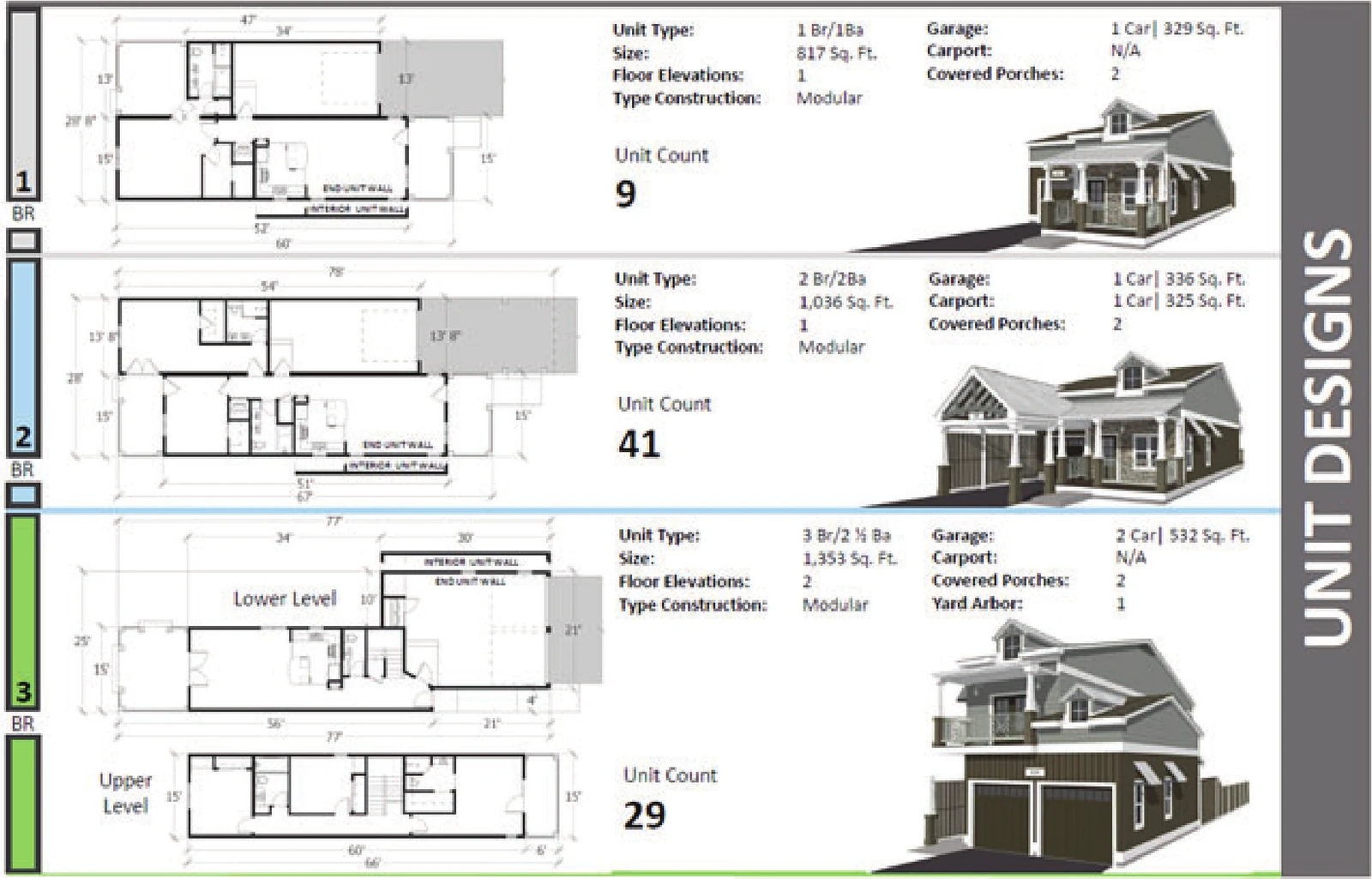
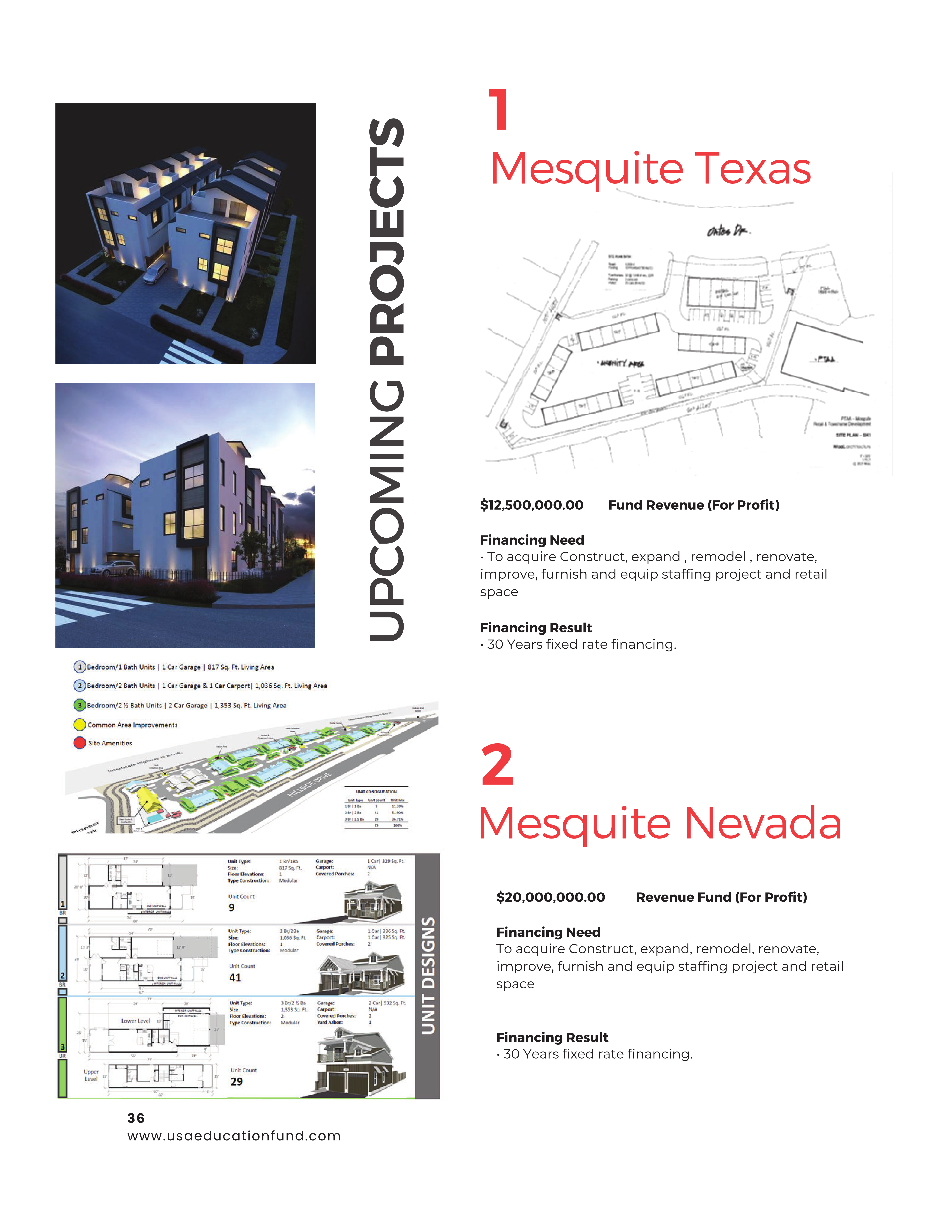
The historical summary describes Mesquite, Nevada as a $20,000,000 residential project. The detailed profile labels the same amount “Revenue Fund — For Profit” and lists acquisition, construction, expansion, remodeling, renovation, improvement, furnishing and equipping of staffing-project and retail space as its financing needs.
The detailed brochure says “thirty-year fixed-rate financing” under “Financing Result.” The scan does not establish the lender, interest rate, closing date, collateral, present project stage or availability of an investment. Those details require current project documents.
Source and status: Historical Mesquite financing scan, printed page 36, publicly served on the original Projects page on 21 November 2026. The proposal amount, programme and printed financing-result wording are historical source statements. Current stage, financing close, interest rate, collateral and investment availability have not been verified as of 21 November 2026. ‘For Profit’ is the source's fund/project label, not an investor-specific tax-treatment conclusion.
Source review: 21 November 2026. Historical scan capture dates are not current offering dates. Issuer disclosures, operator statements and sponsor concepts are distinguished in the profile; a linked source does not confirm a private offering or successful document delivery.
View full rendering
View full rendering
View full rendering
View full rendering
View full renderingRecord 2, printed page 36. This is an archival brochure scan, not a current offering memorandum. Compare all twelve historical summary rows and numbered records.
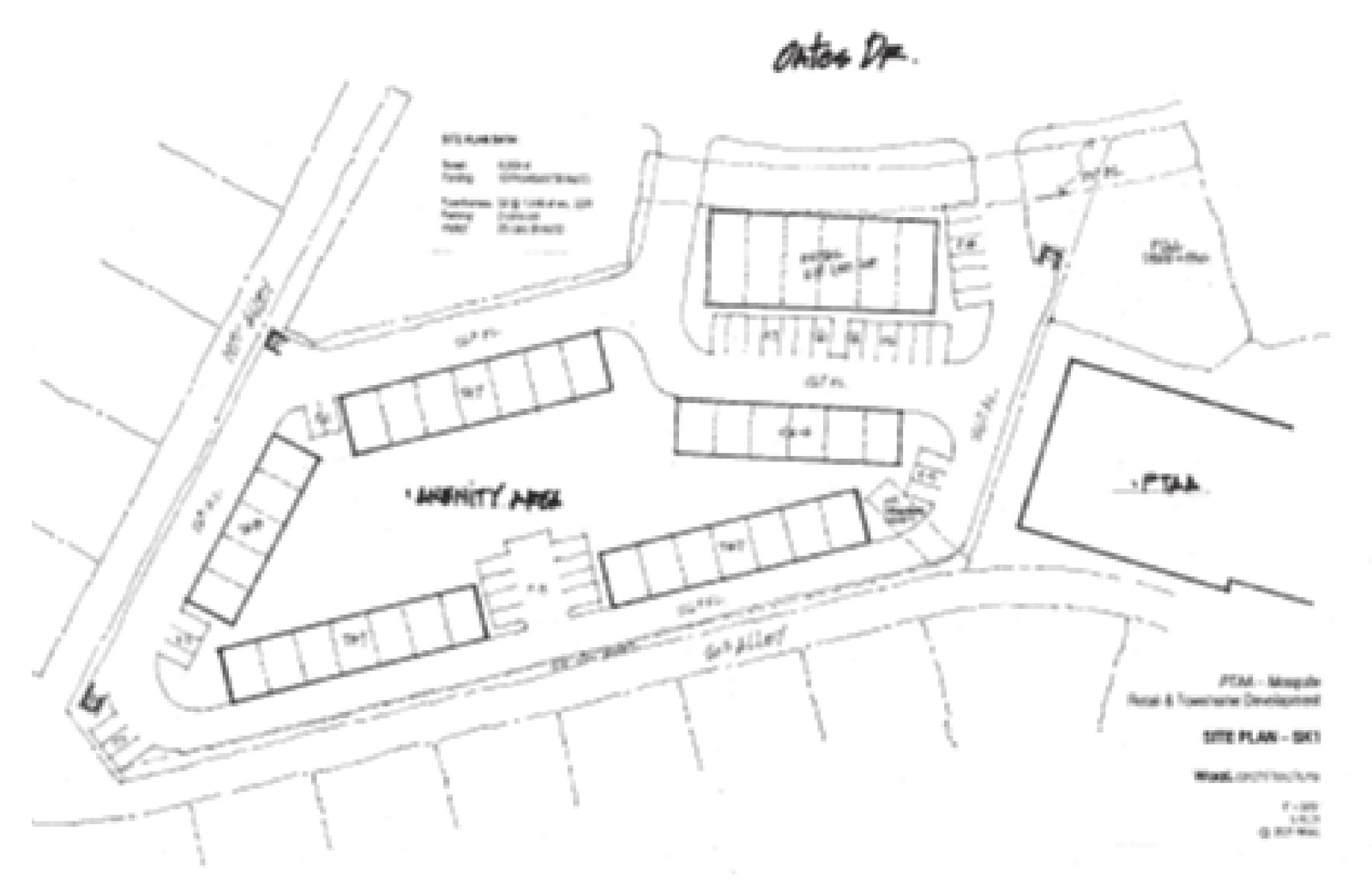
Original website brochure scan — preserved for historical reference. Printed project amounts and financing-result wording are not verified current terms. Open the full image to inspect the source.
Source: original website upload (Upcoming-Project-list1.png). Captured 21 November 2026; that is the source-review date, not an offering or project-completion date.
Selected from the source materials identified in this profile. Historical descriptions and proposed scope are not verified current terms or delivered milestones. Ask which definitive project, financing and offering documents exist and can be released; inclusion does not establish EB-5 eligibility.
$20 million historical revenue-fund proposal
Residential in the summary; staffing-project and retail space in the financing profile
Acquisition, construction, expansion, remodeling, renovation, improvement, furnishing and equipping listed
Printed thirty-year fixed-rate financing description; no verified lender, closing or current terms
Location helps identify the relevant project and labor market, but a city or state label does not establish EB-5 eligibility. As of 21 November 2026, the statutory minimum is $1,050,000 generally, or $800,000 for qualifying investments in a targeted employment area — rural or high-unemployment — or a qualifying infrastructure project. An education facility, arena, public benefit or conduit municipal bond does not automatically establish either reduced-threshold category. Whether a project here qualifies, how its jobs are counted and whether a reduced threshold applies must be established in current project documents and reviewed with independent immigration counsel.
Infrastructure has a specific statutory definition involving a governmental job-creating entity and a public works project. The statute reserves 20% of visas for rural investments, 10% for high-unemployment investments and 2% for infrastructure investments; visa availability and petition adjudication are separate.
The first inflation adjustment applies to petitions filed on or after 1 January 2027, with adjustments every five years. This profile publishes no unverified adjusted dollar amount. Regional-center visas are authorized through 30 September 2027. Separate expired-legislation protection covers qualifying regional-center-related petitions filed on or before 30 September 2026; that cutoff has passed. Legislative-lapse protection is not approval, and later filings are not described here as grandfathered.
Qualifying capital must genuinely be at risk. Under USCIS’s current post-RIA interpretation, petitions filed on or after 15 March 2022 generally require at least two years, measured from when the full qualifying capital is placed at risk and made available to the job-creating entity, as applicable. Pre-RIA investors generally sustain their investment through the two years of conditional residence. Job-creation issues may require more time and contracts may retain capital longer. This is not a universal through-I-829 rule, and completing an immigration minimum never triggers or guarantees repayment.
View full renderingEB-5 requires a qualifying new commercial enterprise — a for-profit organization engaged in ongoing lawful business — and at least ten qualifying full-time jobs per investor. Jobs held by the investor, spouse or children do not count. Preserving existing jobs is limited to the applicable troubled-business rules. A school, hotel, arena or construction budget alone does not establish qualifying employment or an investor allocation.
Applicable regional-center rules allow up to 90% indirectly estimated jobs. Indirect jobs from construction lasting less than two years can satisfy only up to 75%, and estimated direct short-construction jobs are duration-adjusted. Request the actual economic report, construction duration, expenditure evidence, model inputs and investor-allocation basis; completed construction or a modeled cushion is not automatic eligibility.
Complete an investor suitability/eligibility questionnaire, engage independent counsel, and ask which PPM, subscription agreement, business plan, economic job report and escrow agreement exist for the selected project and can be released. Regional-center studies do not remove the investor's personal eligibility, lawful-funds or qualifying-investment responsibilities. No uniform document pack or current economist engagement is confirmed by this page.
Temporary or bridge financing may precede EB-5 replacement, but job credit is conditional: replacement generally must have been contemplated when temporary financing was obtained, or the funding intended as short-term financing to be replaced by longer-term capital. Qualifying capital must reach the business responsible for the jobs. Request the executed bridge agreements, expenditures and applicable project records.
For security, inspect the offering and executed financing documents for collateral, priority, senior debt, covenants, reporting/inspection/enforcement rights and intercreditor limits. Investor equity need not carry a direct mortgage; no senior lien, universal RIMS II method, completed pre-filing study or quarterly reporting is assumed. Sponsor screening is not USCIS approval.
USCIS investor policy · USCIS project and job-creation policy

Dallas, Texas · Education

Original brochure illustration. RV-park illustration — historical proposal illustration; Pahrump site identity not established. Project-site identity and current completion status are unverified.

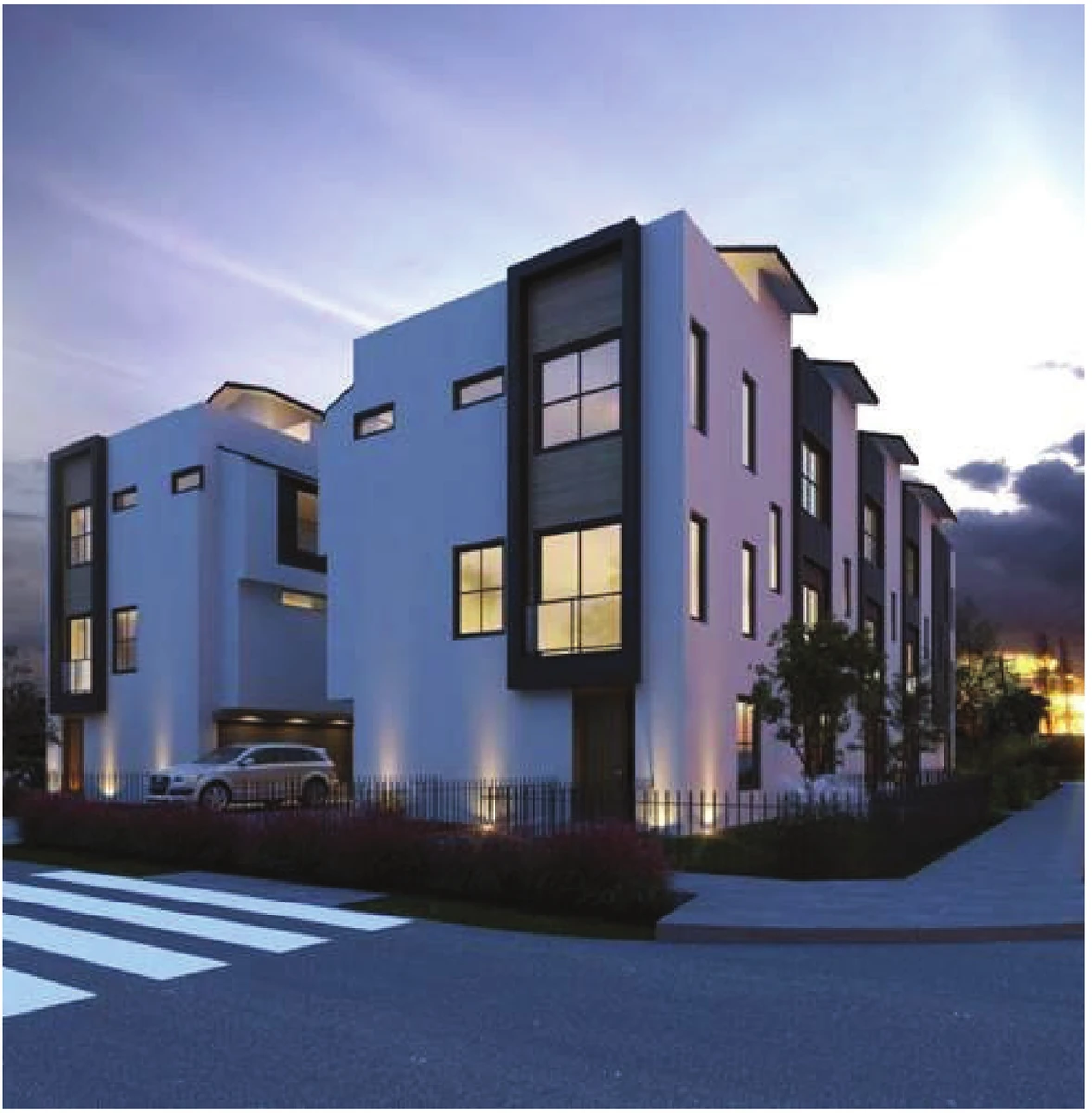
Original brochure illustration. Mesquite residential exterior rendering — view 2. Historical brochure concept, not an approved or as-built drawing. Project-site identity and current completion status are unverified.

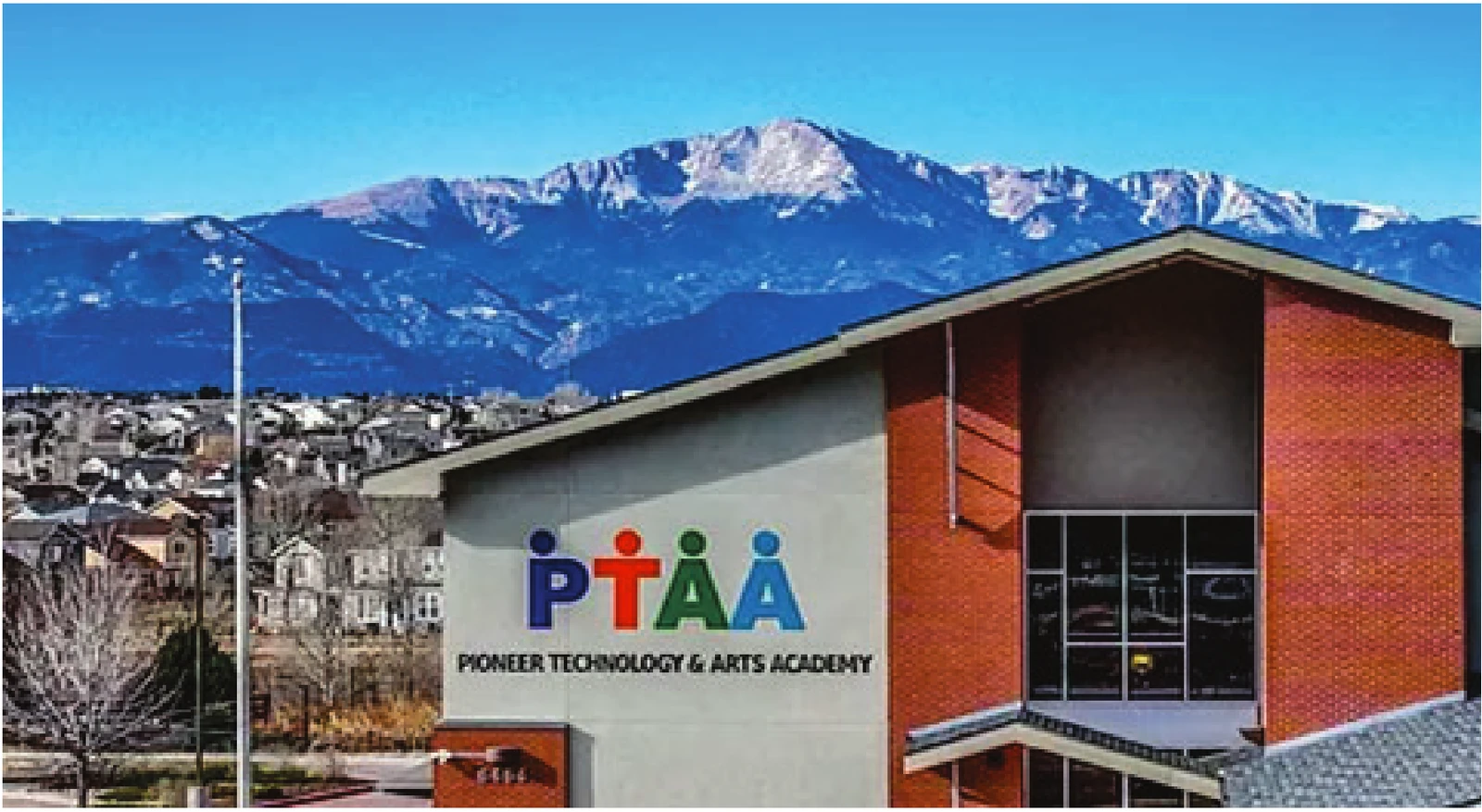
Original brochure illustration: PTAA-labelled exterior from the historical Colorado source page — a reference building, NOT the North Dallas campus. Current campus condition and completion status are unverified.
Ask which current job studies, executed financing and security documents, offering terms and phasing records exist and can be released. This profile is not an offer of securities and does not establish document availability or an investment, job, repayment or immigration outcome.