Chloe
Conversational tutoring and personalised learning support.
AI is a dedicated investment focus alongside the physical campuses, sports facilities and hospitality projects. Its intended audiences include K–12, colleges, corporations, federal agencies and state agencies—with different learning needs, buyers and implementation requirements.
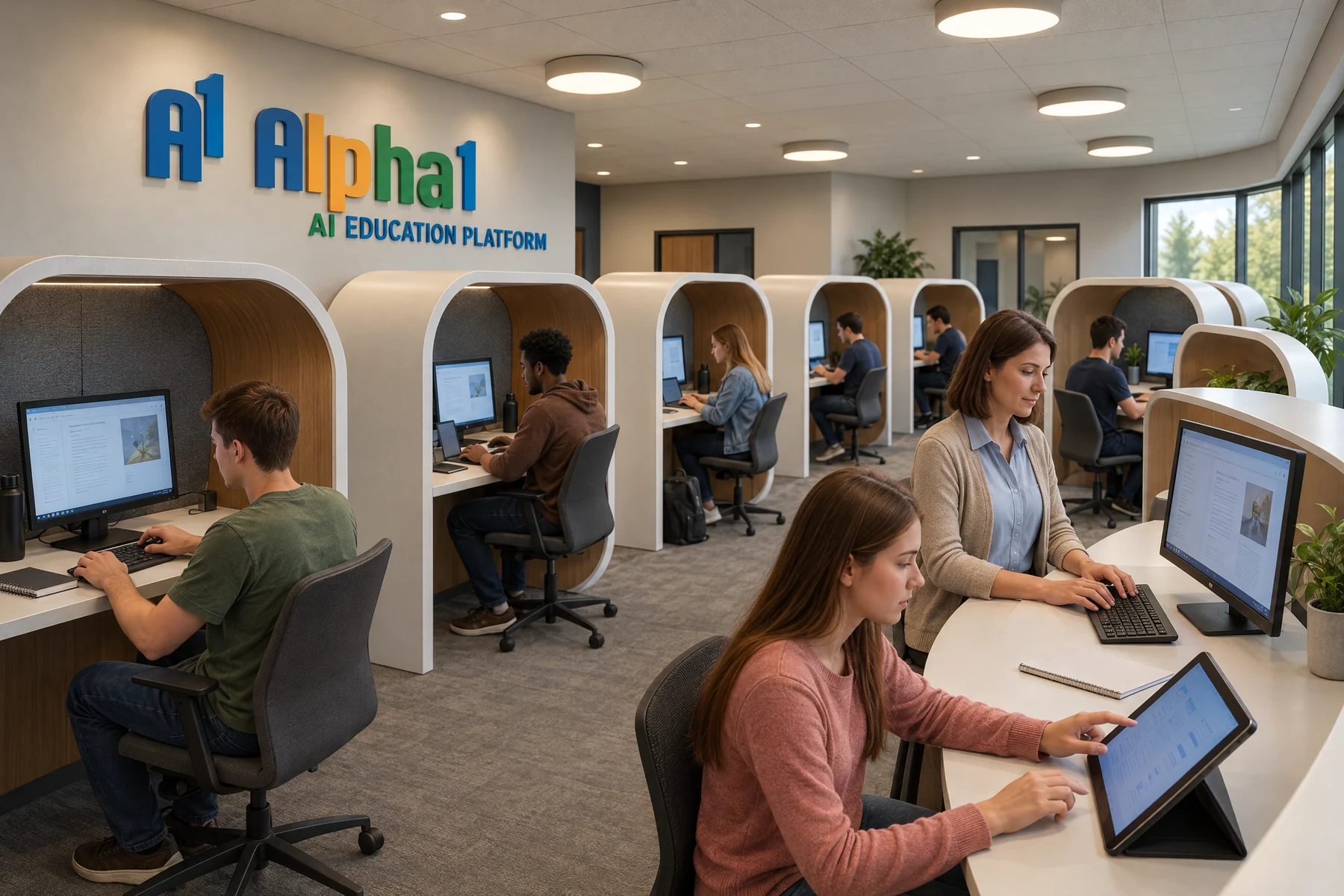
A software platform has its own product, intellectual property, operating costs and route to adoption. It should be assessed separately from a campus property or an arena-and-hotel development.
Our expanded investment direction includes AI-supported education and workforce training. The objective is to connect useful learning technology with the people and organisations that can implement it responsibly: educators, instructors, trainers and authorised institutional teams.
The related Alpha1 AI, SSS and PTAA materials provide education-platform context. They do not by themselves prove a Fund equity interest, ownership of the software, a completed investment or deployments in every market. Product and customer evidence belongs to the specific opportunity.
Alpha1’s official platform describes these products. They show why AI education is broader than a school-building investment; the descriptions are operator-reported, not independently tested performance or compliance claims.
Authentic related-platform mark. Product context does not establish Fund software ownership or a contracted deployment.
Conversational tutoring and personalised learning support.
Rapid learning and onboarding for workforce-training needs.
In-depth courses and structured learning, including higher-education use cases.
Cited answers from an organisation’s approved documents and data.
Curriculum and lesson-development assistance for educators and trainers.
Support age-appropriate learning across private schools, sports academies and charter settings. Investment priorities include curriculum-aligned practice, teacher-led differentiation, assessment support and continuity for learners with different schedules. The educator remains responsible for instruction and review; AI assistance is not a replacement for safeguarding or professional judgement.
Before implementation: Confirm student-data rights, parental and school arrangements, age-appropriate access, human review and independently measured learning evidence.
PTAA Texas describes optional Alpha1 tutoring with district-provided home access. SSS describes AI-assisted student-athlete academics, and Online School of Arizona describes Alpha1 alongside its learning system and certified teachers. These are operator-published programme descriptions; individual usage, learning gains and Phoenix programme delivery are not independently established.
Public source review: 22 November 2026.
Explore AI-supported learning, academic support, continuing education and workforce pathways in higher education. Priorities include course and content integration, instructor tools, student support and practical skills development. A college-focused initiative needs an institutional partner and a defined programme; K–12 platform use alone does not establish a higher-education deployment.
Before implementation: Review institutional agreements, academic integrity, accessibility, content licensing, assessment responsibilities and the scope of any pilot.
Alpha1’s official channel expressly names colleges and universities, and its Scholar product describes university use cases. No named college or university deployment was established in the reviewed profiles.
Public source review: 22 November 2026.
Treat corporate education as workforce learning, not school enrolment. Potential priorities include onboarding, role-specific training, knowledge refresh, manager support and AI literacy. Investment can support platform adaptation, approved enterprise content, implementation and evaluation. Confidential company information and employment decisions require controls separate from an educational demonstration.
Before implementation: Confirm the buyer, actual contract or pilot, confidential-data controls, intellectual-property rights, integration needs and measurable training objectives.
Alpha1 describes onboarding, workforce and compliance-training capabilities, including unnamed corporate activity. The reviewed material does not establish a named corporate customer or its contract terms.
Public source review: 22 November 2026.
Include federal workforce education and training as a strategic audience for responsible AI learning. Potential work includes mission-specific training, skills development and secure knowledge-support tools. Any agency use needs a separately defined scope, procurement path, information classification and authorised deployment. Public-sector interest must not be presented as an awarded contract or endorsement.
Before implementation: Verify contracting authority, actual award documents, security and privacy requirements, accessibility and whether the proposed system is authorised for the relevant environment. No federal customer, award or certification is established here.
Alpha1’s company-issued update dated 29 August 2026 describes federal curriculum work, configuration, demonstrations and stakeholder discussions. It names no agency customer, executed award or production deployment. This is active market-development context, not government endorsement.
Public source review: 22 November 2026.
Explore state workforce training, agency learning and public-sector skills programmes as a distinct audience. Needs can vary by department and jurisdiction, from employee development to approved training programmes. State procurement, records, privacy and accessibility requirements must be assessed independently; a relationship with a public charter school is not a contract with a state agency.
Before implementation: Confirm the specific agency, procurement route, agreement, information controls and reporting requirements. State-agency inclusion is an investment priority, not evidence of an awarded deployment.
State-agency education is part of the client’s broadened investment focus within Alpha1’s government-learning context. No named state-agency customer or deployment is established; state standards support is not state-government adoption.
Public source review: 22 November 2026.
These priorities describe possible uses of investment—not current budgets, a financing commitment, a securities offer or a promised return.
Learning software, educator and trainer workflows, content delivery, assessment support and the engineering capacity needed to maintain a dependable product. Confirm which capabilities actually exist and which remain a development plan.
Approved learning content, curriculum adaptation, licensing and subject-matter expertise. Establish ownership, permitted use, third-party model and content dependencies and the rights included in any transaction.
Learning-system integration, deployment support, educator or trainer onboarding and bounded pilots. A demonstration, a memorandum or an intended audience is not the same as a signed customer agreement.
Human oversight, appropriate data controls, accessibility, model evaluation and independent learning or training evidence. Compliance and security requirements must be demonstrated for the actual product and use case—not inferred from a website description.
A technology investment must identify the issuer or business, ownership and licensing rights, actual agreements, capital needs, security terms and risks. An AI product does not automatically qualify for EB-5, tax-exempt bonds or public procurement. Government users require their own authorised acquisition and deployment process.
Existing Alpha1 AI films remain available with their source posters and click-only players. Films provide platform context, not independent proof of efficacy, software ownership or contracted adoption.
Alpha1 AI overview
Alpha1 AI
Identify the intended users, actual product, ownership and data rights, implementation plan and proposed use of capital. Current customer agreements, investment availability and definitive terms must be confirmed separately.